SOCIAL MARKETING PORTFOLIO

SOCIAL MARKETING CAMPAIGN I
Lift Her Up
Stronger Together. Stronger For Life.
A women’s resistance training campaign promoting strength, confidence, and lifelong health.
Campaign Overview
Lift Her Up uses social marketing principles to make resistance training approachable, empowering, and relevant for women at different life stages. The campaign addresses downstream (individual), midstream (community/organizational), and upstream (healthcare) influences, encouraging women to build confidence, reduce barriers, and strengthen their health across the lifespan.
Health Topic
Women’s Resistance Training
Strength training helps preserve muscle, support mental health, and protect bone density as women age. Many women avoid strength training due to myths, intimidation, or lack of clear guidance. This campaign reframes lifting as a tool for empowerment, longevity, and community support.
Campaign Title & Logo
Lift Her Up
Tagline: Stronger together, stronger for life.
(Insert your logo here)
Key Influencers
-
OB/GYNs & physical therapists
-
Female fitness coaches & strength advocates
-
Community gyms and women’s wellness programs
-
Military/DOD wellness centers
These influencers help spread consistent messaging across individual, community, and organizational levels.
Audience Segmentation
1. Young Women (18–25)
Alt Text: Three young women smiling in athletic wear after a workout.
This image highlights friendship, confidence, and early habit-building. It speaks to young women who may feel intimidated starting a fitness routine alone, emphasizing community and empowerment
2. Busy Women (25–40)
Alt Text: A mother exercising at home while holding her baby.
This image reflects real-life responsibilities such as parenting or hectic schedules. It reinforces that even short, flexible workouts can build strength and reduce stress.
3. Menopausal & Post-Menopausal Women (45+)
Alt Text: A middle-aged woman smiling while lifting a dumbbell.
This image showcases confidence and capability in later adulthood. It supports messaging about strength training for bone health, independence, and healthy aging.
Why These Images Work
Each image was selected to reflect real women in realistic settings and life stages. They reinforce the campaign’s core message: women can lift each other up and lift themselves through every age and season of life.
How Social Marketing Was Applied
This campaign incorporates core social marketing strategies by:
-
Segmenting women by life stage
-
Tailoring messages to each group’s motivations and barriers
-
Using relatable imagery to increase relevance and confidence
-
Leveraging influencers across downstream, midstream, and upstream levels
-
Providing clear calls to action to encourage participation
SOCIAL MARKETING CAMPAIGN II
Strong Foundations
Protein Built Strength
Campaign Overview
Strong Foundations is a women’s nutrition campaign that highlights protein as the building block of strength, energy, bone health, and lifelong wellness.
Purpose
To encourage women to increase their daily protein intake in simple, realistic ways that support their muscles, bones, metabolism, and overall health.
Focus
This campaign uses clear visuals and practical guidance to help women understand how much protein they need, why it matters, and how to add it to everyday meals.
Logo
The stacked-block design represents protein as the foundation of women’s health — when the base is strong, the whole structure stays supported.
Campaign Poster
This poster highlights why protein matters, simple ways to add it to meals, and recommended daily intake ranges for women.
Why This Matters
Many women fall short on their daily protein needs, which affects strength, bone density, and long-term health. Strong Foundations uses social marketing principles to make protein education accessible, memorable, and actionable.
How Social Marketing Was Applied
-
Identified a current nutrition-related health issue affecting women: inadequate protein intake.
-
Designed a clear, memorable campaign identity (“Strong Foundations”) to increase message recognition.
-
Created a visual metaphor (foundation blocks) to simplify a complex behavior and influence attitudes.
-
Tailored messaging to women’s common barriers such as time, confusion about requirements, and lack of awareness.
-
Provided simple, actionable steps (add protein to each meal) to increase behavior feasibility.
-
Ensured materials were visually inclusive, accessible, and appropriate for a broad population of adult women.


SOCIAL MARKETING CAMPAIGN III
The Quiet Advantage
Quiet Your Space. Calm Your Mind.
Campaign Purpose
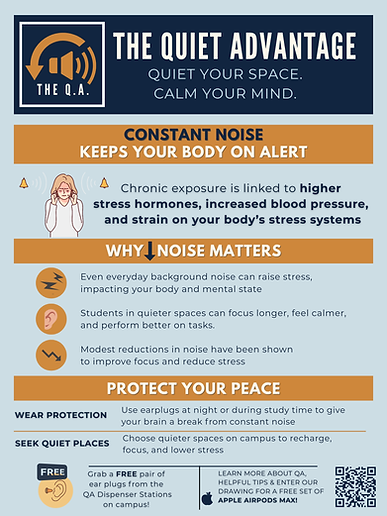
The Quiet Advantage focuses on the often-overlooked impact of everyday noise on student health. Even low-level background noise — dorm chatter, hallway traffic, shared walls — can elevate stress hormones, disrupt sleep, impair focus, and drain mental energy. This campaign encourages college students to take small steps to reduce noise exposure so they can improve their well-being, focus, and sense of calm.
Target Audience
Undergraduate students living in dorms or high-density campus housing.
This group experiences chronic background noise that interferes with sleep, studying, and stress regulation. The campaign’s messaging and visuals are designed to reflect the daily environment students recognize and navigate.
Campaign Poster
How Social Marketing Was Applied
-
Identified a specific audience (undergraduate dorm residents)
-
Highlighted the consequences of everyday noise in simple, relatable terms
-
Used approachable messaging and visuals to make noise reduction feel doable
-
Provided clear direction through practical solutions: earplugs, quiet study zones, and campus resources
-
Designed the poster to shift both awareness and behavior around noise exposure
.png)


SOCIAL MARKETING CAMPAIGN IV-V
Gator Recharge
Recharge Your Body. Reset Your Mind.
A University of Florida sleep health campaign helping students build better nighttime routines and healthier sleep environments.
Campaign Logo
Campaign Overview
Gator Recharge uses social marketing principles to help UF students improve their sleep habits through small, realistic changes that fit their busy schedules. The campaign includes behavior-based challenges, environmental strategies, and student-centered messaging to support better rest, stronger focus, and improved well-being.
This project combines two components:
-
Gator Recharge (Sleep Behavior and Habit Change)
-
Gator Nest Reset (Sleep Environment Transformation)
Together, these materials promote consistent sleep routines, reduced screen time, and calm, supportive sleep spaces.
Health Topic
Many UF students struggle with irregular sleep schedules, late-night screen use, noise, and overstimulating living environments. These behaviors and conditions affect concentration, mood, academic performance, and long-term health.
Gator Recharge encourages students to establish healthier nighttime routines and modify their physical spaces to support better-quality rest.
Target Audience
UF undergraduate students living in dorms or campus apartments who experience poor sleep due to disrupted schedules, noise, lighting, and technology use.
Key Influencers
-
GatorWell and UF Student Health
-
Resident Assistants and Housing teams
-
Peer ambassadors and wellness clubs
-
UF Health and campus organizations promoting student well-being
These partners reinforce consistent messaging across individual, community, and campus channels.
Campaign Materials
1. Gator Recharge Poster (Behavior and Habit Focus)
Alt Text: Poster promoting the Gator Recharge 21-Day Sleep Challenge with QR code, emphasizing improved energy, focus, and sleep habits.
Description:
This poster highlights the benefits of joining the 21-Day Sleep Challenge. It promotes practical steps like screen-free wind-down routines, consistent bedtimes, and sleep space auditing. The QR code offers immediate access to resources, making participation simple and accessible.
2. Gator Nest Reset Poster (Environment Focus)
Alt Text: Split-screen dorm room image showing a messy, overstimulating sleep space on one side and a calm, dimly lit sleep environment on the other.
Description:
This poster illustrates how a student’s physical environment influences sleep quality. The visual contrast shows how decluttering, reducing light exposure, and limiting technology can transform rest. The message encourages students to complete a “Nest Reset” using the Gator Recharge app.
Why These Images Work
-
They depict true-to-life student environments and relatable barriers.
-
The visuals emphasize achievable changes, not unrealistic expectations.
-
The posters use clear UF branding and student-centered messaging.
-
QR codes and action steps make the behavior feel immediate and doable.
How Social Marketing Was Applied
This campaign uses core social marketing approaches by:
-
Segmenting UF students by environment and behavior patterns
-
Tailoring messages to motivations like energy, focus, and stress relief
-
Using visual contrasts to highlight benefits of behavior change
-
Leveraging campus influencers to increase reach
-
Providing clear calls to action through QR codes and digital tools
-
Delivering both behavior-based and environment-based strategies


SOCIAL MARKETING CAMPAIGN VI
STUDY STRONG
Protect Your Spine While You Grind
A posture and core-strength campaign helping college students reduce pain, improve focus, and strengthen their bodies during long study hours.
Campaign Logo
Campaign Overview
Study Strong uses social marketing strategies to help UF students understand how prolonged sitting affects their posture, core stability, and overall well-being. The campaign focuses on building simple, achievable habits students can use at their desks to reduce pain, prevent stiffness, and improve concentration.
The materials highlight quick routines and posture corrections that can be done anywhere, lowering barriers to exercise and increasing students’ confidence in their ability to protect their long-term musculoskeletal health.
Health Topic
Posture, Core Stability, and Musculoskeletal Health in College Students
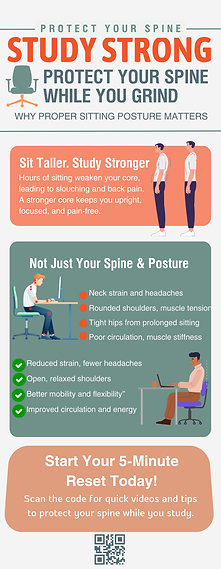
College students spend long hours sitting for classes, studying, and screen use. This leads to weakened core muscles, slouching, tension, headaches, back pain, and reduced circulation. Poor posture impacts performance, mood, and long-term health.
Study Strong reframes core strength and posture correction as quick, accessible steps that support healthier studying and better energy throughout the day.
Campaign Title & Key Message
Study Strong
Protect Your Spine While You Grind
Core idea: Small daily posture resets improve comfort, focus, and long-term health.
Influencers
These partners strengthen message reach and alignment across campus:
-
UF physical therapists and athletic trainers
-
Campus recreation and fitness instructors
-
Health and wellness ambassadors
-
UF faculty who model positive study behaviors
These influencers reinforce consistent messages across individual, community, and institutional levels.
Audience Segments and Visuals
1. Students With High Study Loads
Alt Text: A student slouched at a desk while studying.
This image shows how long study hours contribute to posture problems. It relates to students who spend long stretches seated and feel the effects of strain, stiffness, or fatigue.
2. Students With Limited Time for Exercise
Alt Text: A student doing a plank in a small study space.
The 5-Minute Desk Core Reset graphic lowers barriers by showing a short, equipment-free routine. It emphasizes that posture correction does not require a gym or extra time.
Why These Images Work
The visuals highlight real student situations: long studying, poor posture, and limited time. They connect directly to common barriers and show small steps students can take immediately. This increases relevance, confidence, and willingness to change.
How Social Marketing Was Applied
Study Strong uses core social marketing strategies by:
-
Reducing perceived barriers by offering quick, simple posture routines
-
Highlighting clear benefits such as reduced pain, better focus, and more energy
-
Using relatable student imagery to increase relevance and motivation
-
Positioning behaviors as achievable during normal study time
-
Providing cues to action such as QR codes for videos and step-by-step sequences
These strategies help students build healthier study habits in realistic, sustainable ways.


SOCIAL MARKETING CAMPAIGN VII
Move to Improve
Stress Less. Move More. Feel Better.
A student-centered campaign that reframes movement as the most effective and realistic stress-management tool for busy college life.
Campaign Overview
Move to Improve uses social marketing strategies to shift how college students cope with stress. Many students rely on quick fixes like caffeine, scrolling their phones, or staying up late, believing they do not have time for physical activity. This campaign reframes movement as the smarter and longer-lasting alternative. Even ten minutes of activity can reduce stress, sharpen focus, and improve mood.
The campaign highlights simple movement breaks, realistic behavior change, and positive coping skills that fit demanding academic schedules.
Health Topic
Movement for Stress Relief and Mental Well-Being
High stress and overwhelm are common among college students, often affecting focus, mood, and energy. Research shows that short, moderate movement breaks can significantly improve mental clarity, reduce tension, and increase overall well-being. Move to Improve helps students replace unhelpful stress habits with simple, accessible bursts of activity that create immediate benefits.
Key Influencers
-
Campus wellness centers and student health programs
-
Peer leaders and friends who model stress-coping behaviors
-
Online influencers promoting realistic movement routines
These messengers help reinforce the idea that movement is simple, doable, and socially supported.
Audience Segments
- Students Relying on Quick-Fix Coping Habits
Alt Text (LEFT Image in Poster): Student sitting at a cluttered desk drinking coffee while studying.
This image represents real-life stress patterns, including caffeine, screen time, and long study sessions. It helps students recognize their current habits and reflect on how overwhelmed they often feel.
- Students Seeking Better Focus and Energy
Alt Text (RIGHT Image in Poster): A college student walking with confidence and ease.
This image highlights a healthier alternative. It reflects clarity, movement, and stress relief and shows that short movement breaks can create immediate, positive change.
Why These Images Work
The side-by-side format visually compares the two choices students frequently make: temporary quick fixes versus movement that provides lasting benefits. It encourages reflection, shows the contrast clearly, and makes the healthier choice feel realistic and achievable.
How Social Marketing Was Applied
This campaign integrates core social marketing principles by:
-
Using competition-focused positioning that directly compares current habits with better alternatives
-
Tailoring messages to student motivations such as focus, energy, and mental clarity
-
Reducing barriers by showing that movement can be quick, simple, and done anywhere
-
Leveraging peer influence through relatable imagery and student-centered messaging
-
Providing clear calls to action that encourage immediate behavior change without requiring perfection

